This is an overview of the latest 3D-PrintCreator videos on YouTube.
3D Scanning My Sauna Outdoors with Revopoint POP 4 to Mount a Light
I am 3D Scanning My Sauna Outdoors with the Revopoint POP 4 to Mount a Light, because I need a custom adapter plate to make it work.
In this project video, ...I scan the outside of my garden sauna with Revo Scan 6 on a Samsung Galaxy S25 Ultra. I show the complete workflow: cleaning and simplifying the point cloud, creating a mesh, aligning it in an early alpha version of my Reverse Engineering Studio, and using the scanned surface in Fusion to shape the back of the lamp mount. Finally, I print the adapter in PETG and install the light above the sauna door.
The scanner briefly loses tracking near the end of the scan, so I also show what happens to that data during point cloud fusion. In Revo Scan 6, I demonstrate why I use Clip and Geometric Simplify, and why I leave the outer boundary open when filling holes.
Reverse Engineering Studio is still in early alpha development and is not available to download yet.
Disclosure: Revopoint provided the POP 4 to me free of charge. I was not paid to make this video. The project, workflow and opinions shown here are my own.
Get the Revopoint Pop 4 here: *Affiliate Link*
https://www.awin1.com/cread.php?s=4795636&v=73435&q=585623&r=2034783
Use code 【REVOPR3DPC】 for an extra 2–7% off on all scanners!
● Official Store: https://www.awin1.com/cread.php?s=4795636&v=73435&q=585623&r=2034783
● Amazon: https://revo.ink/Amazon3DPrintCreator
● Join Revopoint Official POP Series Facebook Group: https://www.facebook.com/groups/revopointpop
● Join Revopoint Official Facebook Group: https://www.facebook.com/groups/revopoint3dofficial
#Revopoint #POP4 #3DScanner #3DScanning #3DPrinting #RevoScanShow More
3D Scanning My Sauna Outdoors with Revopoint POP 4 to Mount a Light
I am 3D Scanning My Sauna Outdoors with the Revopoint POP 4 to Mount a ...
I am 3D Scanning My Sauna Outdoors with the Revopoint POP 4 to Mount a Light, because I need a custom adapter plate to make it work.
In this project video, ...I scan the outside of my garden sauna with Revo Scan 6 on a Samsung Galaxy S25 Ultra. I show the complete workflow: cleaning and simplifying the point cloud, creating a mesh, aligning it in an early alpha version of my Reverse Engineering Studio, and using the scanned surface in Fusion to shape the back of the lamp mount. Finally, I print the adapter in PETG and install the light above the sauna door.
The scanner briefly loses tracking near the end of the scan, so I also show what happens to that data during point cloud fusion. In Revo Scan 6, I demonstrate why I use Clip and Geometric Simplify, and why I leave the outer boundary open when filling holes.
Reverse Engineering Studio is still in early alpha development and is not available to download yet.
Disclosure: Revopoint provided the POP 4 to me free of charge. I was not paid to make this video. The project, workflow and opinions shown here are my own.
Get the Revopoint Pop 4 here: *Affiliate Link*
https://www.awin1.com/cread.php?s=4795636&v=73435&q=585623&r=2034783
Use code 【REVOPR3DPC】 for an extra 2–7% off on all scanners!
● Official Store: https://www.awin1.com/cread.php?s=4795636&v=73435&q=585623&r=2034783
● Amazon: https://revo.ink/Amazon3DPrintCreator
● Join Revopoint Official POP Series Facebook Group: https://www.facebook.com/groups/revopointpop
● Join Revopoint Official Facebook Group: https://www.facebook.com/groups/revopoint3dofficial
#Revopoint #POP4 #3DScanner #3DScanning #3DPrinting #RevoScanShow More
Revopoint POP 4 scanning a Shiny Black object. No editing 3D print. #revopoint #pop4 #revoscan
Most 3D scanner are having difficulties when scanning black or shiny ...
Most 3D scanner are having difficulties when scanning black or shiny objects, so today I am scanning a Shiny Black object with the Revopoint POP 4 3D scanner.
It has no ...problem scanning the object or combining the scans, leaving me with a perfect STL to print.
Full review on my YouTube long videos.Show More
Is Revopoint POP 4 the Right 3D Scanner for You? My Honest Review
Do you think the Revopoint POP 4 is the Right 3D Scanner for You? My ...
Do you think the Revopoint POP 4 is the Right 3D Scanner for You? My Honest Review
In this review I show how the Revopoint POP 4 can do much more ...than simply digitize an object. In this video, I show how I scan real objects, automatically align multiple scans, and turn the results into a point cloud, mesh, textured model, and Gaussian Splat.
My first practical test was immediately useful: recreating a missing battery cover without using any CAD software. After calibrating the scanner, I captured the part from several angles, merged the scans, and printed the model at its original size. It fitted perfectly on the first attempt.
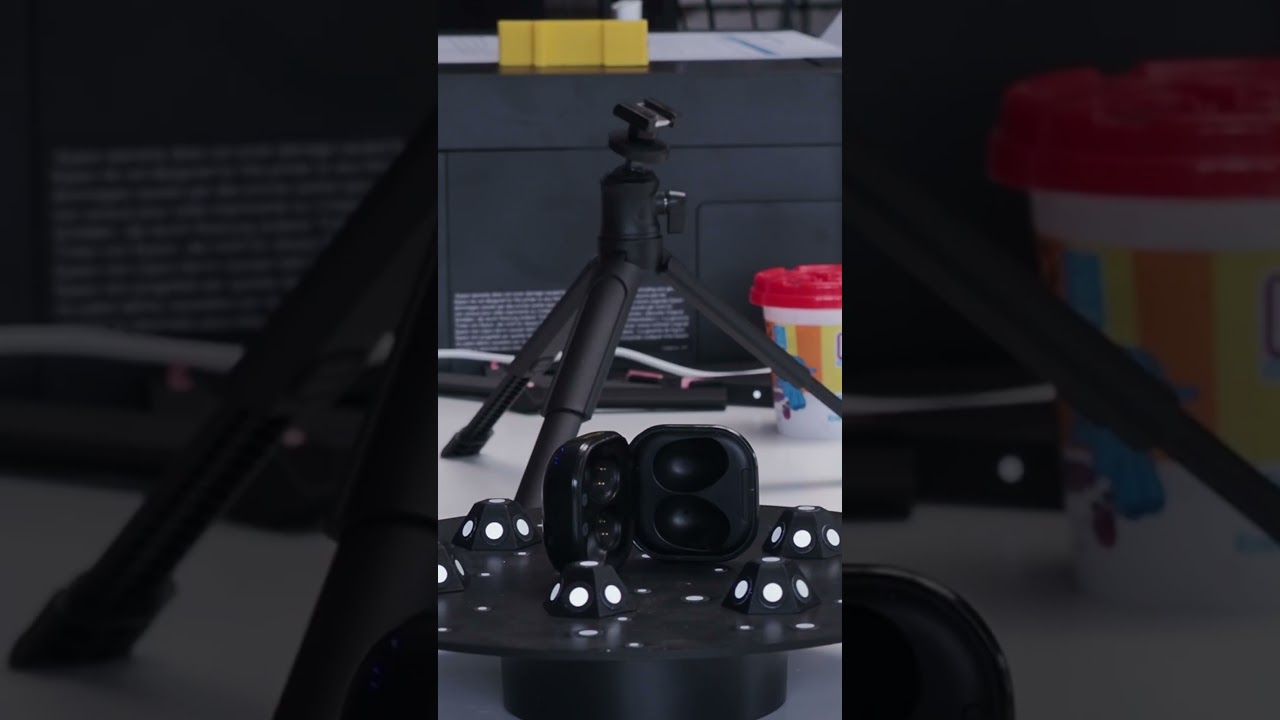
I then test the POP 4 with different scanning modes and considerably more challenging objects. Can it scan a black, highly glossy earbuds case that is almost completely symmetrical? And how well can the laser line mode capture deep screw holes and small details on a complete jigsaw?
I also show what is included with the Premium Edition, how Full-Field HD scanning with markers works, and what you can do when scanning wirelessly with a smartphone.
Of course, not everything is perfect. I also discuss the mobile app, which occasionally stopped unexpectedly during my tests, and an important save button in Revo Scan 6 that is almost impossible to find.
Finally, I explain who I think the POP 4 is suitable for and whether I would genuinely recommend this scanner after testing it in real-world situations.
The Revopoint POP 4 Premium Edition was provided to me free of charge. Revopoint did not pay for this video and had no influence over my experiences, opinions, or final conclusion.
Get the Revopoint Pop 4 here: *Affiliate Link*
https://www.awin1.com/cread.php?s=4795636&v=73435&q=585623&r=2034783
Use code 【REVOPR3DPC】 for an extra 2–7% off on all scanners!
● Official Store: https://www.awin1.com/cread.php?s=4795636&v=73435&q=585623&r=2034783
● Amazon: https://revo.ink/Amazon3DPrintCreator
● Join Revopoint Official POP Series Facebook Group: https://www.facebook.com/groups/revopointpop
● Join Revopoint Official Facebook Group: https://www.facebook.com/groups/revopoint3dofficial
#Revopoint #POP4 #3DScanner #3DScanning #3DPrinting #RevoScanShow More
This $1 3D Print Could Save You a $1200 Camera Repair
Download the model here for FREE: ...
Download the model here for FREE:
https://makerworld.com/nl/models/2679271-arca-swiss-compatible-tether-plate-5-sizes
If you do livestreams on Twitch or YouTube, or work with cameras, monitors, lights, or other tripod-mounted gear, this is a small 3D print that ...can save you a very expensive repair.
A broken USB or HDMI port on a camera can easily cost anywhere from $500 to $1200 to repair. That kind of damage often happens because cables get pulled, bent, or stressed while your camera is mounted on a tripod, rig, or slider.
That is exactly why I designed this 3D printable Arca Swiss Quick Release Plate.
It does two important jobs at the same time:
1. Quick mounting
It works as an Arca Swiss quick release plate, so you can quickly attach and remove your gear from a tripod, slider, or other support system.
2. Cable strain relief
It helps reduce stress on your camera’s USB and HDMI ports by managing cable pull much better. That means less risk of damaging the ports, less wear over time, and a safer setup overall.
And the best part:
You can print it for less than $1.
I made this plate in several popular sizes, so it can be used with cameras, video gear, lights, monitors, and many other devices that use a standard 1/4-20 screw.
Available sizes:
38mm
50mm
60mm
70mm
80mm
The 38mm square version can be mounted in multiple orientations, which makes it especially versatile.
You only need to add a standard 1/4-20 screw, the same type used in most tripod plates. These are easy to find in camera stores and online.
If you like practical 3D prints that solve real problems, make sure to subscribe and let me know in the comments what gear you would use this for.
#3DPrinting #ArcaSwiss #QuickReleasePlate #CameraGear #StreamingSetup #MakerWorld #ContentCreator #TripodPlate #CameraRig #FilmmakingShow More
Acmer P1 S Pro Change DPI Settings for engraving images
If you have an Acmer P1S Pro, you can engrave sharper when you set ...
Acmer P1 S Pro Laser Review, This One Setting Makes It Much Better
The Acmer P1 S Pro is a 6W diode laser engraver, but it turns out this ...
The Acmer P1 S Pro is a 6W diode laser engraver, but it turns out this machine is actually better than the manufacturer claims! In this in-depth Acmer P1 S ...Pro review, I show you which setting you should change immediately to get sharper engravings and better results than the manual recommends.
Buy the Acmer P1 S Pro here:
https://acmerlaser.com/products/acmer-p1-s-pro-laser-engraving-machine
(Not an affiliate link)
In this video, I take a detailed look at the Acmer P1 S Pro 6W laser engraver, including assembly, build quality, safety, software compatibility, and real engraving performance. But most importantly, I explain why the recommended DPI in the manual is not optimal, and how adjusting this setting really improves engraving quality.
What you will learn in this video:
- Why the Acmer P1 S Pro is better than the manual suggests
- The correct DPI settings for the 6W diode laser
- How dot size affects engraving sharpness and photo quality
- A practical defocus trick for faster engraving without loss of quality
- Build quality pros and cons including frame rigidity and roller alignment
- Safety considerations for open-frame diode lasers
- Compatibility with LightBurn and LaserGRBL
- Real-world engraving results on wood and anodized aluminum
The Acmer P1 S Pro uses a 6W blue diode laser with a very fine spot size, which allows for much higher engraving detail than the default 318 DPI suggested by Acmer. By adjusting the DPI to 363 DPI, photo engravings become noticeably sharper with smoother gradients and better detail separation.
This laser engraver is aimed at demanding hobby users and small businesses who want high engraving quality without spending thousands on an enclosed Diode laser. While it lacks enclosure and fume extraction, the engraving performance for the price is genuinely impressive.
Safety note:
Always use proper laser safety glasses rated for 445nm blue diode lasers with at least OD3 protection. Never rely solely on magnetic shrouds or included accessories.
If you found this video useful, please consider liking the video and subscribing to the channel for more laser engraving and maker content.
Buy me a coffee or a spool of filament:
https://support.3d-printcreator.com (Paypal)
Find my designs on MakerWorld and print them for FREE:
https://makerworld.com/nl/@3d_printcreator/upload
#acmer #acmerP1SPro #laserengraving #diodelaser #lightburn #maker #smallbusiness
0:00 Acmer P1 S Pro overview
0:29 Unboxing and first impressions
2:09 Build quality and assembly time
2:47 First engraving and safety concern
3:19 Frame rigidity and roller alignment
3:57 Control box and connections
4:26 WiFi and software limitations
6:22 Laser spot size and technical specs
6:44 Why the manual DPI is wrong
7:03 Best DPI settings for sharper engravings
7:32 Faster engraving defocus trick
8:04 Engraving results on wood and aluminum
8:30 Laser safety and eye protection
9:09 Who this laser is for
9:46 Open frame limitations and fumes
10:19 Final verdict and recommendation
10:47 Smaller Acmer laser comparison
11:31 Subscribe and closingShow More
My cat wants his burnmark | Is it even possible?
Of Course, it's not possible to burnmark my cat under a laser, in ...
Of Course, it's not possible to burnmark my cat under a laser, in fact, I never had that discussion with him. But... The only negative about the Acmer P 1 ...S Pro that I could think of, is that this is not possible... What does it say about the rest of the laser?
The full review will be out soon. Subscribe to learn more about it.
No cats were hurt during the making of this video!
Buy me a coffee or a spool of filament:
https://support.3d-printcreator.com (Paypal)
Find my designs on MakerWorld and print them for FREE:
https://makerworld.com/nl/@3d_printcreator/uploadShow More
ACMER S1 Laser Engraver | 3D Print your own aligning stand
The ACMER S1 laser engraver is a small budget-friendly laser that ...
ACMER S1 Laser Engraver | Budget Mini Laser Making Custom Gifts
The ACMER S1 laser engraver is a small budget-friendly laser that ...
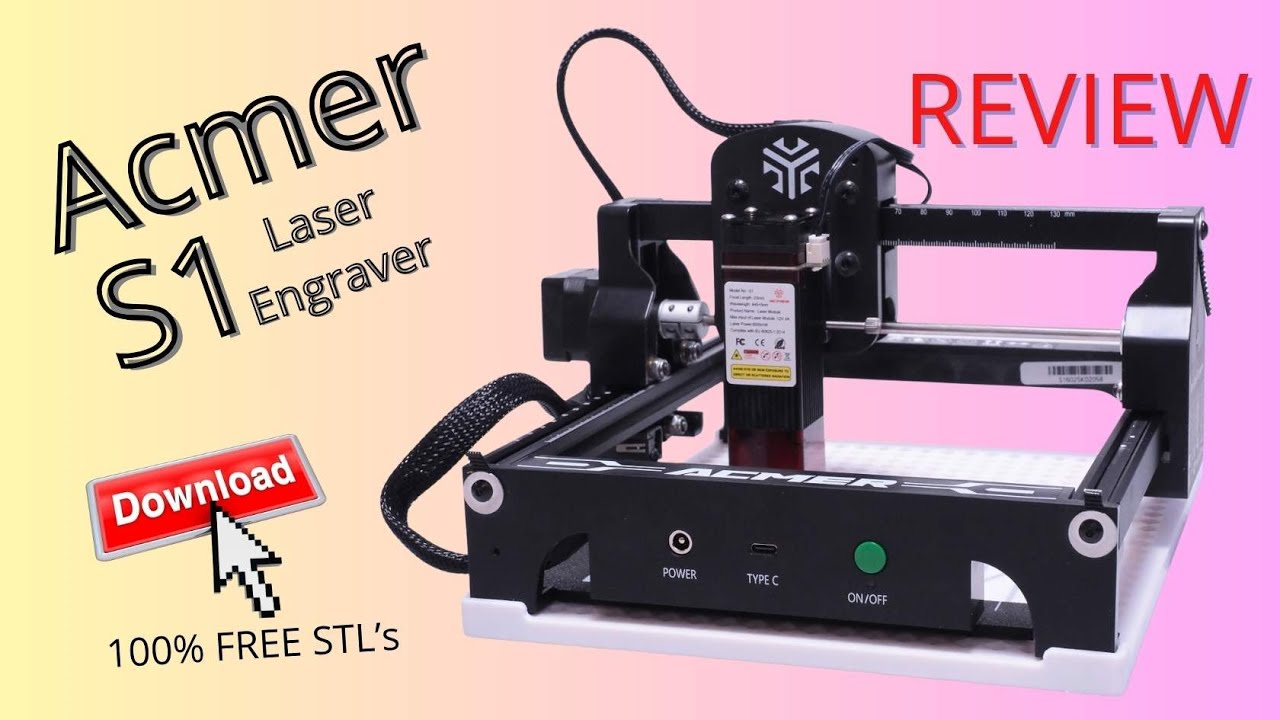
The ACMER S1 laser engraver is a small budget-friendly laser that makes engraving simple and fun.
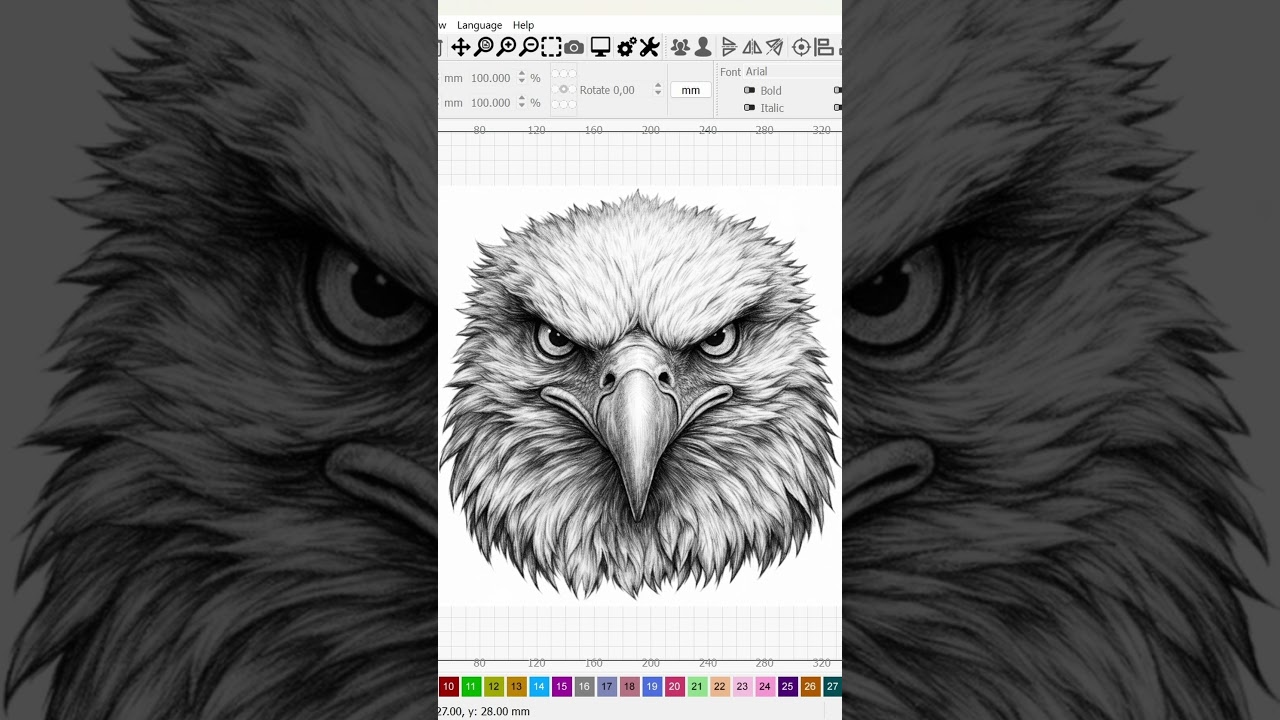
I show real products engraved with the ACMER S1 on wood, aluminum, felt and paper, ...from clean text to high-quality photo engravings on wood.
This portable mini laser engraver is perfect for small custom gifts, DIY projects and creative engraving, even for beginners.
Watch the full video in my channel.Show More
ACMER S1 Laser Engraver Review – Ultra Sharp Engraving Under $150
Buy the Acmer S1 here: ...
Buy the Acmer S1 here:
https://eu.acmerlaser.com/products/portable-laser-engraver-mini-machine
Download the 3D printable Acmer S1 table and tools here:
https://makerworld.com/nl/models/2204943-acmer-s1-modular-positioning-cable-management
In this review I test the ACMER S1 laser engraver and compare it directly to one of ...my professional 24W diode laser engravers.
Despite its very low price, the ACMER S1 delivers extremely sharp engraving results thanks to its ultra small laser spot size of just 0.04 to 0.06mm, depending on the model.
In terms of engraving detail and precision, this compact desktop diode laser performs far beyond what you would normally expect from Diode lasers in general, and especially in this price range.
The ACMER S1 is available in 2.5W, 3.5W and 6W versions.
In this video I test the 6W version, but I also explain why the lower power versions can actually be even sharper when it comes to fine detail engraving, single line fonts and line drawings.
If your main goal is engraving small objects, thin materials or highly detailed designs, this laser engraver is a very interesting option.
This is a small, lightweight and portable open frame diode laser engraver with a working area of 130 x 130 mm. It connects via USB and works with popular laser software such as LightBurn and LaserGRBL. Because of its compact size, the ACMER S1 fits easily on a desk and can even be used on location with a laptop and a suitable 12V power source.
This video focuses primarily on engraving quality.
While the ACMER S1 is technically capable of light cutting with enough passes, this is not a cutting laser. If you are mainly looking for cutting thick wood or acrylic, this is not the right machine.
The real strength of the ACMER S1 is high precision laser engraving.
I also discuss important safety considerations.
The ACMER S1 is an open frame diode laser and lacks features such as a tilt switch, fire detection and an emergency stop. This means the laser should never be left unattended.
In the video I explain these limitations honestly and show how I personally work with this machine in a safe way.
To improve usability and safety, my son and I designed several practical 3D printed accessories, including a print bed and alignment tools.
These files are available for free via my MakerWorld account and can help you get more accurate and consistent engraving results.
If you are interested in fine detail engraving, single line fonts, small text, logos, names or personalized items, the ACMER S1 laser engraver delivers outstanding results for its price.
Even when compared to a much more powerful 24W diode laser, the engraving sharpness of the ACMER S1 is truly impressive.
⏱ Chapters:
00:00 ACMER S1 vs 24W Diode Laser – Engraving Comparison
01:05 ACMER S1 Specifications and Versions
01:38 Ultra Small Laser Spot Explained (0.04mm – 0.06mm)
02:22 Single Line Fonts and Fine Detail Engraving
03:06 Can the ACMER S1 Cut Wood?
03:34 Software: LightBurn and LaserGRBL
04:15 Laser Safety Concerns Explained
05:06 3D Printed Accessories for the ACMER S1
06:03 Final Verdict – Is the ACMER S1 Worth Buying?
If you enjoyed this review, please give it a thumbs up and consider subscribing.
More laser engraver reviews, comparisons and practical projects are coming soon.
Buy me a coffee or a spool of filament:
https://support.3d-printcreator.com (Paypal)
Find my designs on MakerWorld and print them for FREE:
https://makerworld.com/nl/@3d_printcreator/uploadShow More
Perfect 3D Scan Alignment for CAD (Stop wasting time!)
Struggling with crooked 3D scans in Fusion 360 or other CAD software? ...
Struggling with crooked 3D scans in Fusion 360 or other CAD software? In this video, I show you the most efficient workflow to get a perfect 3D scan alignment for ...CAD using tools you already own.
While the new Creality Scan 4 1.5.13 update introduced an alignment feature, it’s often faster and more precise to use a 3D slicer for your orientation. Whether you use Bambu Studio, Orca Slicer, or Creality Print, I’ll demonstrate why your slicer is actually a powerful coordinate correction tool.
In this tutorial, you will learn:
How to fix the orientation of a Creality Scan 4 mesh for better CAD integration.
Why a slicer provides better flat bases and automatic mesh repair than the native scanner software.
The step-by-step process of exporting a scan to Fusion 360 with the correct origin.
A side-by-side comparison between Creality's new alignment tool and the slicer-based method.
This "Any Slicer" method is a game-changer for anyone doing reverse engineering or 3D scanning for 3D printing who wants to save time and improve accuracy.
⚠️ Important Note: This method is perfect for visual alignment and statues. For professional engineering that requires true world-coordinate or origin referencing, please check my dedicated deep-dive video linked below!
Learn how to orient your scan in Fusion here:
https://www.youtube.com/watch?v=cDD7NwLf_q8
Tools Used:
3D Scanner: Creality Raptor Series (but this goes for ANY scanner)
Software: Creality Scan 4 (v1.5.13)
Slicers: Bambu Studio / Orca Slicer / Creality Print / Etc.
CAD: Autodesk Fusion
#3DScanning #CrealityScan4 #Fusion360 #3DPrinting #BambuStudio #ReverseEngineering #3DScanner
0:00 Stop wasting time with bad alignment
0:32 The problem with manual alignment in Creality Scan 4
1:58 Why eyeballing alignment is far from perfect
2:38 Exporting the "Creality Aligned" version
3:13 The alternative: Starting with a messy, unaligned scan
4:04 Checking the alignment issues in Fusion 360
5:36 The "Any Slicer" workflow (Bambu Studio / Orca)
6:51 Using the slicer's precision tools for orientation
7:57 Creating a perfect flat base (The Slice Tool)
8:20 Automatic Mesh Repair during slicing
9:53 Exporting the repaired and aligned STL
11:15 Result comparison in Fusion 360: Slicer vs. Native
12:35 Conclusion: Why your slicer is the better tool
14:35 Outro: Subscribe for more scanning tips
If this helped you, please like and subscribe for more 3D scanning and 3D printing tutorials.
Buy me a coffee or a spool of filament:
https://support.3d-printcreator.com (Paypal)
Find my designs on MakerWorld and print them for FREE:
https://makerworld.com/nl/@3d_printcreator/uploadShow More
Bambu Lab AMS filled with Broken Filament? | Here is the fix.
Fixing broken filament inside your Bambu Lab AMS can be tricky, ...
Fixing broken filament inside your Bambu Lab AMS can be tricky, especially with the original AMS that came with the P1 and X1 series printers.
Did this video help you, ...and did it save you from hours of frustration?
Please buy me a coffee or a spool of filament here:
https://support.3D-PrintCreator.com (Paypal) Thanks!!!
In this video, I’ll show you exactly how to locate and remove jammed or broken filament pieces from your AMS -step-by-step-.
We’ll take the AMS apart safely, check the PTFE tubes, clear the internal hub, and reconnect everything properly (this includes a PRO TIP). This works for the Original Bambu Lab AMS, compatible with P1P, P1S, and X1C printers and almost all other Bambu Lab printers.
Whether your filament snapped inside the PTFE tube or in the Internal HUB, or your AMS won’t load filament anymore, this guide will help you get your printer back to work in minutes.
What You’ll Learn
- How to remove broken filament from the original Bambu Lab AMS
- How to identify where the filament is stuck (PTFE tube or internal hub)
- How to safely disconnect and reassemble the AMS
- How to test that all channels are clear
🧰 Tools Used
Basic hex screwdriver
About 60cm of GREEN filament (for testing)
📦 Works with:
✅ Bambu Lab AMS for P1 and X1 series printers
✅ The original AMS (not AMS-HT or AMS 2)
💡 Tips
If your AMS keeps jamming, try drying your filament or checking for sharp bends in the PTFE tubes.Show More